Table of Contents
About the Author
More Posts


One of the hardest things to accept is that the most important work you do may not be finished by you.
I don’t particularly like that thought. At least, not naturally.
I want to see progress now. I want to see the thing take shape while I am still here to enjoy it. I want some proof that the labor is paying off.
Why unfinished work feels so frustrating
Most of us want completion on our timeline.
You want to put your hands to something and watch it become what you hoped it would become. You want to build the business, strengthen the family, serve the church, and then stand back and say, “There. It’s done.”
That desire makes sense.
But it can also narrow your vision.
Because once you assume the goal is to finish everything yourself, you start measuring faithfulness by speed, control, and visible completion. You start acting like the value of your work depends on whether you get to see the final version.
It’s a fragile way to build.
Some work is meant to be completed quickly. Most meaningful work is not. The best things in life usually take longer than your preferred timeline. Sometimes much longer.
So part of maturity is learning to stop demanding immediate closure from work that was never designed to fit inside one neat season of your life.
Lasting things are usually built by more than one generation
Anything sturdy enough to last usually takes time beyond one person’s horizon.
That’s true in the physical world, and it’s true in the spiritual realm too.
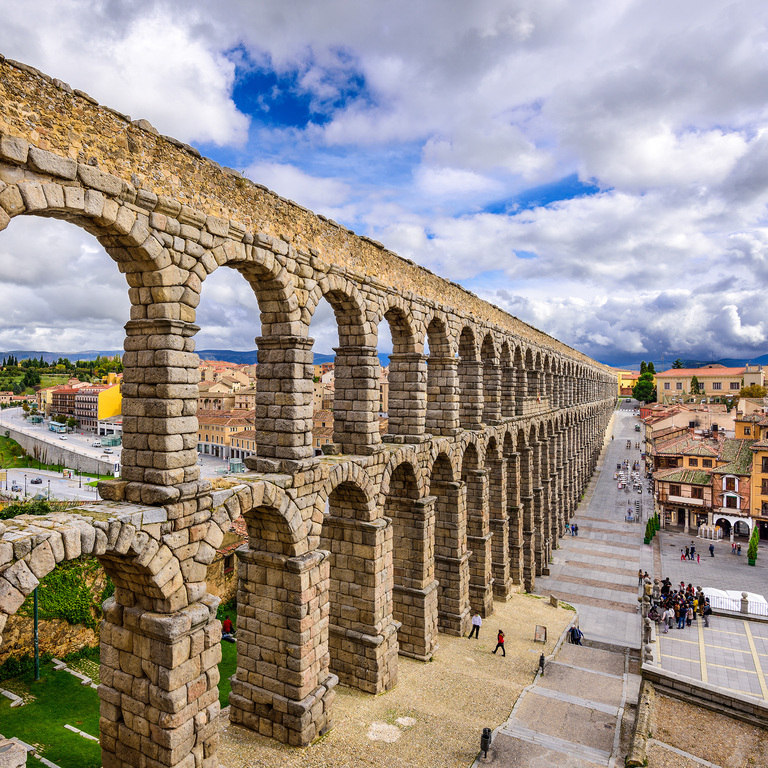
Cathedrals were not built in a day. Many of the most beautiful and enduring structures in history were built by people who knew they might only lay part of the foundation. They gave themselves to work they knew they would never see completed.
That takes a different kind of imagination.
It requires the humility to say, “My job may not be to finish the whole thing. My job may be to build my part well.”
That applies in more places than we think.
You may not finish the work of shaping your family in the way you hope. You may not finish the work of building a mature business in the way you picture. You may not finish the work of strengthening your church in the way you long for.
But that does not mean your labor is small.
It may mean your labor is part of something larger than your lifetime.
Jeremiah 29 gives us a longer horizon
Faithfulness often looks more rooted than dramatic.
Jeremiah 29 is not a verse about quick relief. It is a passage about settling in, planting, building, and living faithfully inside a long story God is telling.
That is why this line matters so much:
Thus says the Lord of hosts, the God of Israel, to all the exiles whom I have sent into exile from Jerusalem to Babylon: Build houses and live in them; plant gardens and eat their produce. Take wives and have sons and daughters; take wives for your sons, and give your daughters in marriage, that they may bear sons and daughters; multiply there, and do not decrease. But seek the welfare of the city where I have sent you into exile, and pray to the Lord on its behalf, for in its welfare you will find your welfare.
That is steady work. That is patient work.
That is work that assumes you do not need immediate escape in order to be faithful. It assumes you can build, plant, and labor with hope even when the final outcome stretches beyond what you can personally control.
You need that kind of horizon.
Otherwise you’ll be tempted to confuse faithfulness with immediacy. You’ll assume the only work worth doing is the work that pays off fast enough for you to enjoy the result.
That is too small a vision for a Christian.
Your job may be to lay the stone
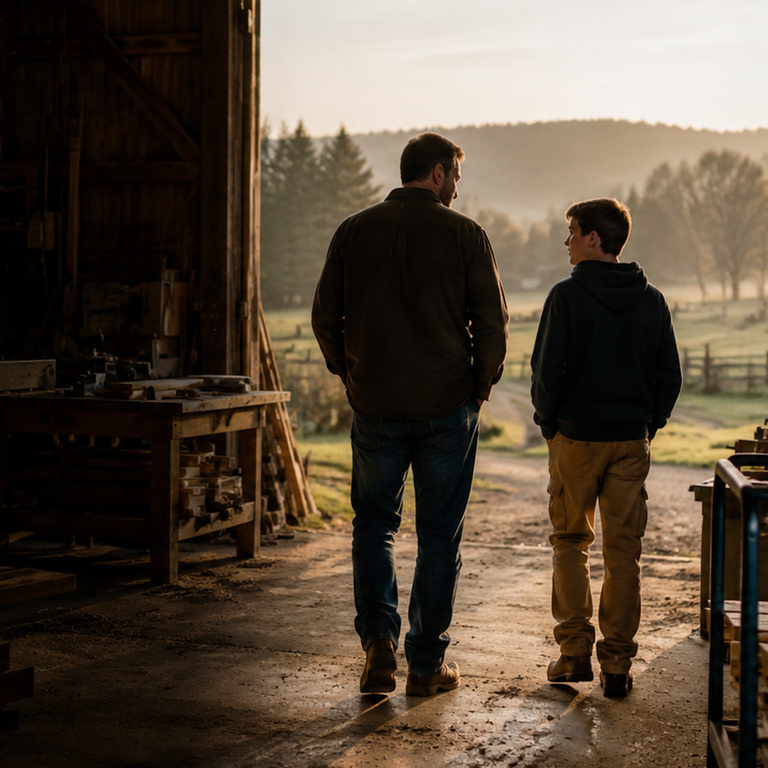
There is deep dignity in foundation work.
Our culture celebrates finished products. God often honors faithful process.
Sometimes your role is to break ground.
Sometimes your role is to carry stone.
Sometimes your role is to strengthen a wall that somebody else will build on later.
That doesn’t make you a supporting character in the wrong story. It makes you a steward in the right one.
So ask yourself:
- Where am I demanding completion when I should be thinking in generations?
- Where am I mistaking visible finish lines for faithfulness?
- What am I building right now that may need to outlive me in order to make full sense?
- What would change if I measured success by obedience instead of immediate closure?
Those questions expose whether you are building for your own timeline or for a much longer one.
Build your part well
You do not need to finish everything in order to be faithful.
That may be one of the most freeing truths you can remember.
You and I are not called to control the whole arc of the story. We are called to steward our part of it. We are called to build honestly, patiently, and well. We are called to leave behind something sturdy enough for others to continue.
So stop despising small beginnings.
Stop assuming unfinished means unimportant.
Stop believing the work only counts if you get to stand in front of the finished building.
Maybe faithfulness is not finishing the whole thing.
Maybe faithfulness is laying your part well.
To thriving,

PS: If this post hit home, then this post on the legacy you’re leaving behind may be another good read - especially around the reality that you are leaving something behind whether you mean to or not.