Table of Contents
About the Author
More Posts
I think a lot of us struggle to tell the difference between patience and passivity.
And that matters, because on the surface they can look pretty similar.
Both can sound calm. Both can use spiritual language. Both can say, I’m just waiting on God.
Why this confusion is so dangerous
The problem is not that patience is bad.
The problem is that passivity likes to borrow patience’s language.
That’s why this gets so slippery. A person can look inactive, sound spiritual, and even feel justified - all while quietly drifting. They’re not resting in God. They’re avoiding action. They’re not practicing contentment. They’re making peace with inertia.
And to make it even more difficult, there really is such a thing as faithful waiting.
Sometimes someday is wisdom. Sometimes it’s patience. Sometimes it’s delayed gratification. Sometimes it’s the maturity to say, not yet.
But sometimes someday is just fear, avoidance, or apathy dressed up in nicer clothes.
That’s the tension.
Not all waiting is faithful. And not all movement is healthy, either.
The two ditches most people fall into
Most well-intentioned people end up in one of two ditches.
One ditch is sacrificing ambition and intentionality in the name of contentment. You tell yourself you’re at peace, but really you have just stopped moving and you’re growing stagnant. You use godliness, gratitude, or trust in God as a reason to sit on your hands. You call it rest, but it’s actually drift.
The other ditch is constantly chasing the next thing while feeling guilty that you’re not more content. You’re striving, pushing, building, pursuing - all without real peace. There’s no settled confidence in God’s provision. There’s no quietness in your spirit. There is only motion.
One ditch is complacency with spiritual vocabulary.
The other is restlessness with a guilty conscience.
Neither one is maturity.
Neither one is what God is calling you to.
Faithful contentment is not complacency. And joyful pursuit is not the same thing as restless striving.
What patience actually looks like
Patience is not just the absence of movement.
Patience is hopeful, peaceful, and obedient.
It rests in God’s provision, timing, and grace without panic. It trusts that He is not late. It receives today as a gift instead of despising the season it’s in. But patience also remains open-handed and ready. It does not use waiting as an excuse to disengage from responsibility. It keeps listening. It keeps obeying. It keeps taking the next faithful step when that step becomes clear.
Passivity is different.
Passivity usually has something unhealthy underneath it - fear, denial, apathy, weariness, or a victim mentality. It says, There’s nothing I can do right now, when the truth is often that there may be something you can do, even if it’s small.
That’s an important distinction.
Maybe you cannot do everything today.
But is it really true that you can do nothing?
Mature faith learns to do both
This is where Christian maturity can get uncomfortable.
The Bible keeps forcing us to hold tensions together. Be still and know that He is God. And also be diligent. Learn contentment. And also bear fruit. Rest in His provision. And also joyfully pursue what He has put in front of you.
That is not a contradiction.
That’s maturity.
Mature faith learns how to rest in gratitude for what God has already done and is doing. It stops despising the present. It stops demanding that peace can only exist once circumstances improve. But mature faith also looks ahead with joyful anticipation. It doesn’t surrender initiative. It doesn’t glorify laziness. It doesn’t confuse passivity for trust.
You’re called to receive today from God.
And you’re called to be faithful in it.
That may mean praying. It may mean planning. It may mean repenting. It may mean acting. It may mean slowing down. It may mean finally stepping forward.
The point is not constant activity.
The point is obedience.
A question worth praying through
Maybe the better question is not just, Am I waiting on God?
Maybe the better question is, Have I drifted into one ditch or the other?
Have you stopped moving and called it contentment?
Or have you kept striving without rest and called it diligence?
Ask God to show you what is really underneath your posture. Ask Him to expose the motives of your heart. Ask Him where you have confused faithful waiting with passive drift, or joyful pursuit with restless striving.
Then ask for grace to do both at once.
Rest in gratitude.
Move forward in joyful obedience.
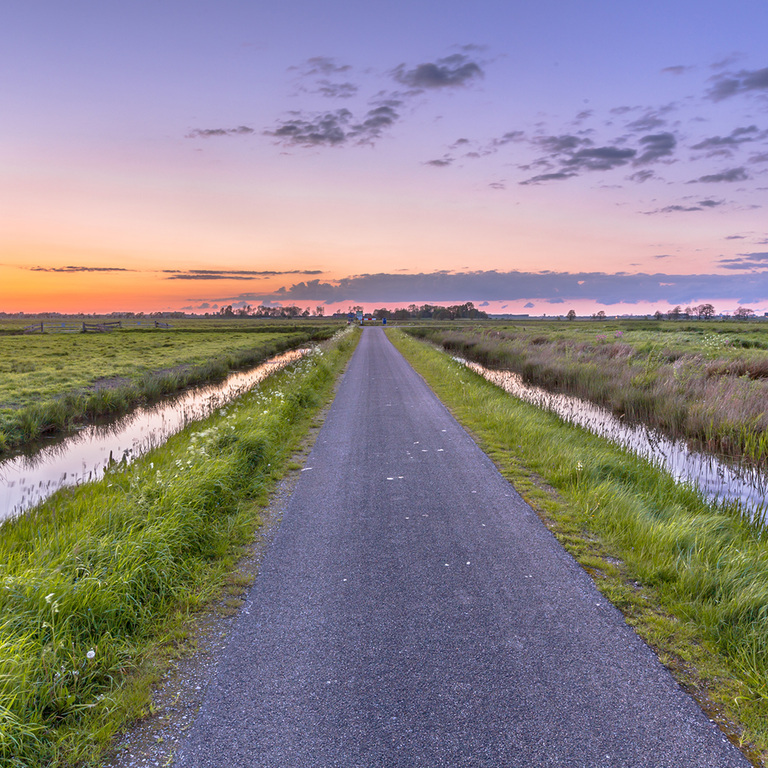
That’s a much narrower road than either ditch.
But it’s a far better one.
To thriving,